September 20, 2026 · 8 min read
Benne: Once Upon A Time In Davanagere
We talk about the experience of eating out as if it's a checklist.
- Good ambience = good vatavaran
- Beautiful interiors
- Fancy service
- Plating that deserves its own Instagram post
- Soft music
- Warm yellow lighting
But for me, when it comes to food, the experience really comes down to three things:
Taste 
Texture 
Temperature


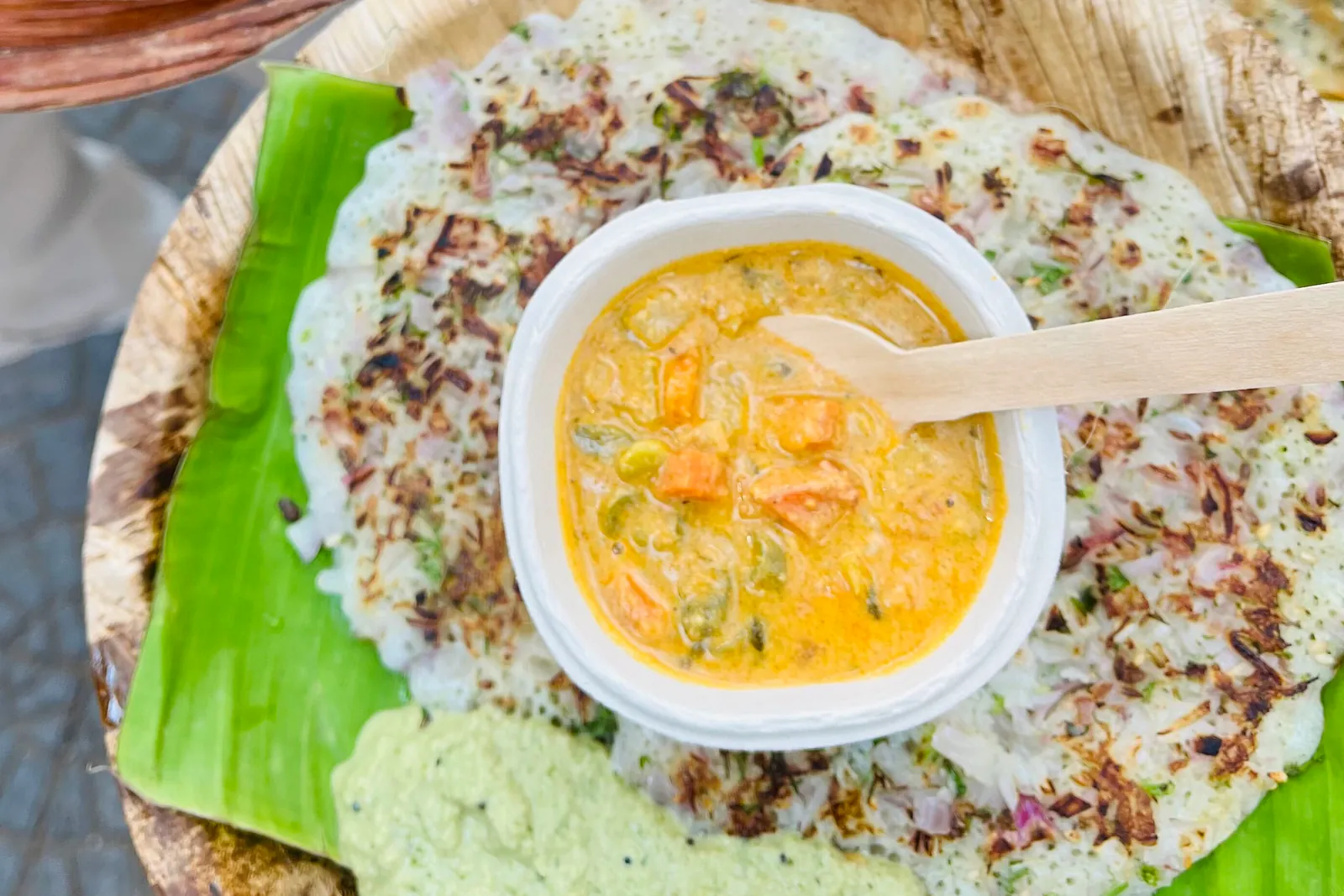
And recently, one particular food has made me think about this a lot more than I expected: Benne Dosa, or Dosae, as it's commonly called in Kannada.
Every state and region in South India has its own version of the dosa, its own batter, its own fermentation, different accompaniments, different ways of eating it, but in recent times one particular form has gained an almost unreasonable amount of popularity, and that's Davanagere Benne Dosa.
Here's the thing though: Benne Dosa has existed in this country for decades; it just felt like there was a secret society of Benne Dosa loyalists quietly gatekeeping it from the rest of us. But decades of effort later, the recipe and the reason it's so good finally got out because you have seen every food influencer drooling over it.
Maybe it wasn't exactly gatekeeping; maybe the rest of India simply wasn't paying attention but we are now.
Where Benne Dosa Actually Comes From
The story of Davanagere Benne Dosa is generally traced back to a woman named Chennamma, who moved to Davanagere with her children during a period of severe economic hardship. She started a small food stall near the Savalagi Drama Theatre, serving dosa, chutney, and potato palya.
And interestingly, the original dosa wasn't the buttery rice crepe most of us picture today.
It is said to have been made with ragi, or finger millet.
But the evolution happened much later, in Davanagere, when Chennamma's sons, Shanthappa and Mahadevappa, experimented with the batter, switching from ragi to a mix of rice, puffed rice (mandakki), and urad dal, and started using generous amounts of white butter, or benne.
That combination changed everything. This new version, thicker, softer, richer, while still developing that characteristic crisp exterior, is what we now know as Davanagere Benne Dosa.
And benne, the melting butter atop your dosa, wasn't just an ingredient, it became the identity of the Benne dosa.
Shanthappa later opened what is widely described as the oldest Benne Dosa eatery in Davanagere in 1944, near the Clock Tower. Other eateries followed, including establishments associated with the wider family and former employees.
But the dish didn't stay local for long; it travelled with migrant workers, labourers, and students into Bengaluru, and became a staple of the city's breakfast culture through places like Central Tiffin Room, Vidyarthi Bhavan, and Janatha Hotel. I wouldn't believe what I read on the internet, but when Vir Sanghvi said it, I had to believe that Bangalore had been slyly eating this for decades before the rest of the country even knew it existed. So if you're tempted to eat this more often, just know you're catching up on the lost years you didn't enjoy Benne dosas.
Benne dosa has existed for so many decades going unnoticed, or as I like to call it, 'being gatekept by the secret society of benne dosae lover', but the interesting thing about food is that sometimes it doesn't need to be invented. It just needs to be discovered by the right people at the right time.
From Davanagere to Bandra
It was only post-pandemic, around 2020 to 2023, that people started noticing it in other parts of India, and finally, in 2024, enter Benne, the Mumbai restaurant started by Akhil Iyer and Shriya Narayan.
They weren't experienced restaurant operators looking for the next scalable food concept. They were two Bengaluru-rooted people who missed the dosa they knew and couldn't find the version they wanted in Mumbai.
So they decided to make it themselves.
I don't know how much of this is true, but I read on the internet that Akhil trained under a dosa maker in Bengaluru and spent time understanding things most customers would probably never think about: the tawa, temperature, fermentation and batter. After months of experimentation, they opened Benne in Bandra in 2024.
By industry standards, Benne did everything it could to fail, and it almost looked like a checklist of things you shouldn't do.
- A tiny space
- A very limited menu
- Minimal seating
- Self-service
- Digital ordering
And, perhaps most controversially for anyone accustomed to a South Indian restaurant:
NO SAMBAR.

Really? They can't possibly win with that strategy. Possibly, the same strategy is now being copied by 85% of upcoming South Indian restaurants in India right now, without anyone looking deeper into their own customer base first.
Except they did.
The tiny Bandra outlet became known for queues, social media buzz, and a very specific proposition: Bengaluru-style dosa served the way its founders remembered it. Benne has since expanded into other locations in Mumbai and Delhi. And by the time this piece went up, investors were in talks to value the whole thing at around 350 crore, a number that later firmed up into an actual funding round led by Claypond Capital, at a post-money valuation of roughly 364 crore.
And two years ago, it was a tiny dosa counter in Bandra with nowhere to sit.
And Then Came Rameshwaram
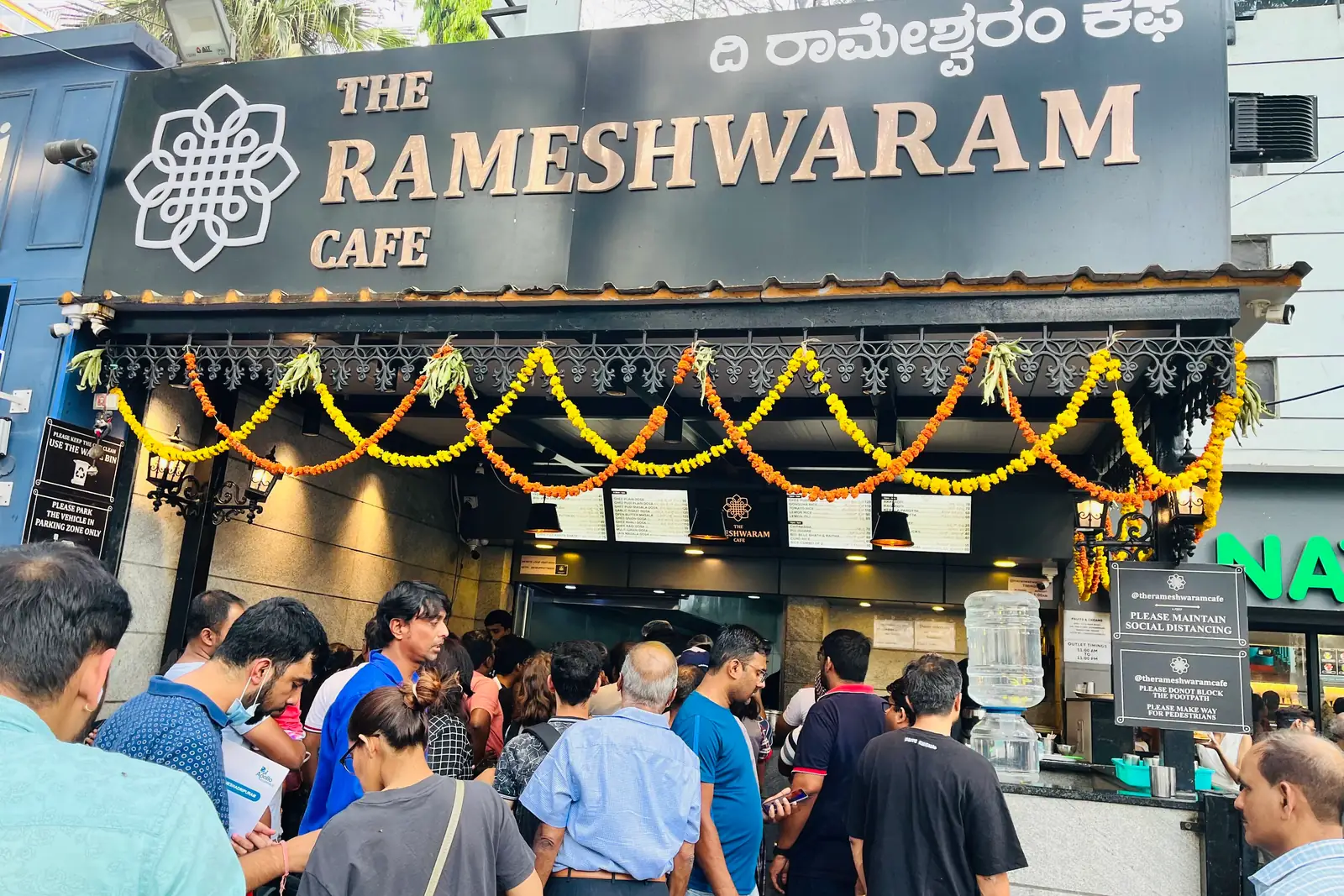
Benne isn't the only example. Rameshwaram Cafe follows a fairly similar playbook.
Founded by Raghavendra Rao and his wife Divya, a chartered accountant and IIM Ahmedabad alumna, the first outlets opened in Bengaluru in 2021, and the approach was never to build a restaurant with something for everyone; it was to build a tightly focused South Indian brand around freshness, speed, and consistency, backed by the kind of financial discipline you'd expect from a CA running the numbers. It's since expanded into Hyderabad, Pune, and Mumbai, and again, the food was never hiding behind the experience; the food was the experience.
What Experiential Food Actually Means to Me
Which brings me to my actual observation: experiential food doesn't really have to mean that everything around it is perfect. It means the food itself is the experience. The taste, rich with butter and the mild flavours of fermented rice, dal and puffed rice, makes the dish genuinely mouth-watering I'm already thinking about the next Davanagere dosa I'm going to eat. The texture, crispy on the outside and soft and supple on the inside, and the way those two textures arrive together in the same bite, does something to your head. And the temperature, that moment when white butter lands on a hot dosa and starts to melt, is honestly all the visual aesthetic you need for your crush to notice you across the table.
Everything else just adds to it: the long queues build the anticipation, the tiny seating screams exclusivity, the open kitchen adds theatre, and an Instagram story about melting benne in Bandra is enough to make everyone ask, "how did you even get in?"
And suddenly, a meal that could have been just another dosa becomes something people are willing to wait for, photograph, talk about, and travel for.
Maybe that's what experiential food really means.
It doesn't necessarily mean that everything around the food has to be perfect. More often than not, the food itself is the experience.
I understand the urge to reverse-engineer everything and assume it was all planned this way, but we all know in reality things turn out differently than imagined in the hospitality industry. There's no way to know if Akhil and Shriya understood the scale of the risk they were taking when they opened with limited seating and no sambar, or if Raghavendra and Divya knew exactly how far the Rameshwaram cafe format could travel. Maybe they simply understood their product extremely well, took the bet, and figured the rest out as they went. That's a question none of us will ever really know the answer to.
Caution: And if you're planning on opening a cafe or a restaurant, research and look a little deeper into your own market, demographics and what your audience actually likes to eat (Period), the ambience, the music, the aesthetics can all be figured out.
So Which One's Actually Authentic?
What genuinely intrigues me is how anyone decides which version is the most authentic one, or who gets to decide what is authentic?
Is it the restaurant owner who spent nights in Bengaluru trying to find the right recipe?
Is it the person who travelled to Davanagere to understand the original?
Is it the person who learnt Kannada because they wanted to understand the culture around the food better?
Or is authenticity something that changes when a dish travels? I don't think I have a definitive answer, and neither does anybody else.
And I'd rather leave that question to people who know the food far better than I do.
Yes, nobody knows what you like better than you do, so go out and try out the food before watching another reel and getting influenced by your favourite food influencer.
Tell me what you think.
Where to Eat It in Jaipur
Here's my list for Jaipur. I haven't tried every Benne Dosa in Jaipur, so this isn't a definitive list. It's simply my list based on what I've actually eaten.
- 1.Madras Mandir Cafe takes the top spot for me. They're still perfecting their Davanagere Dosa, but I had the privilege of trying it and I can confidently say it is worth travelling to Vidhyadhar Nagar for.
- 2.Benneluru would take the second spot for me. As close to the style as I've had in Jaipur. Their Royal Kempu Davanagere Dosa genuinely takes you back to the bylanes of Davanagere.
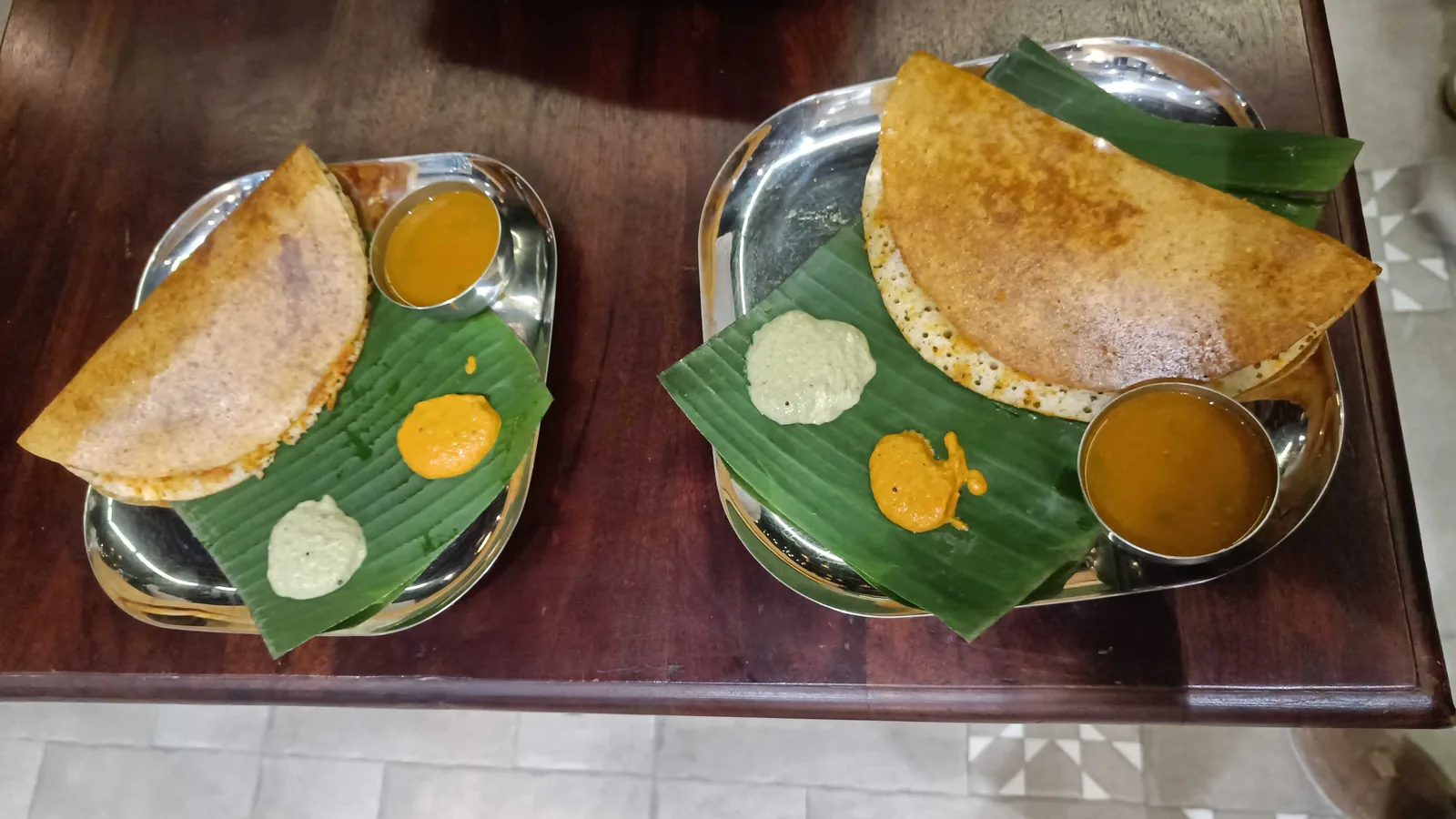
Although I would really appreciate it if they didn't throw customers out or ask them to leave the moment they've taken their last bite.
And that's the beauty of experience, right? The dosa should take you there, but the customer experience should make you want to stay.
There might be several other places in Jaipur serving Benne Dosa, including Panch Kailash, Kaaram, Rasakund, Mohannam, Dosaka, and Banana Leaf, though I haven't ranked or fully vouched for them yet.
If I haven't mentioned others, it is probably because I haven't tried them yet or I didn't enjoy it (I guess you will never know).
So, I'm listening. Where should I go next?
Because apparently, the secret society of Benne dosa lovers isn't so secret anymore, and I don't trust any of the food influencers, for they post at least 20 food recommendations in one day.

Fermented by Aayush
Co-Founder & CBO @ Palyt